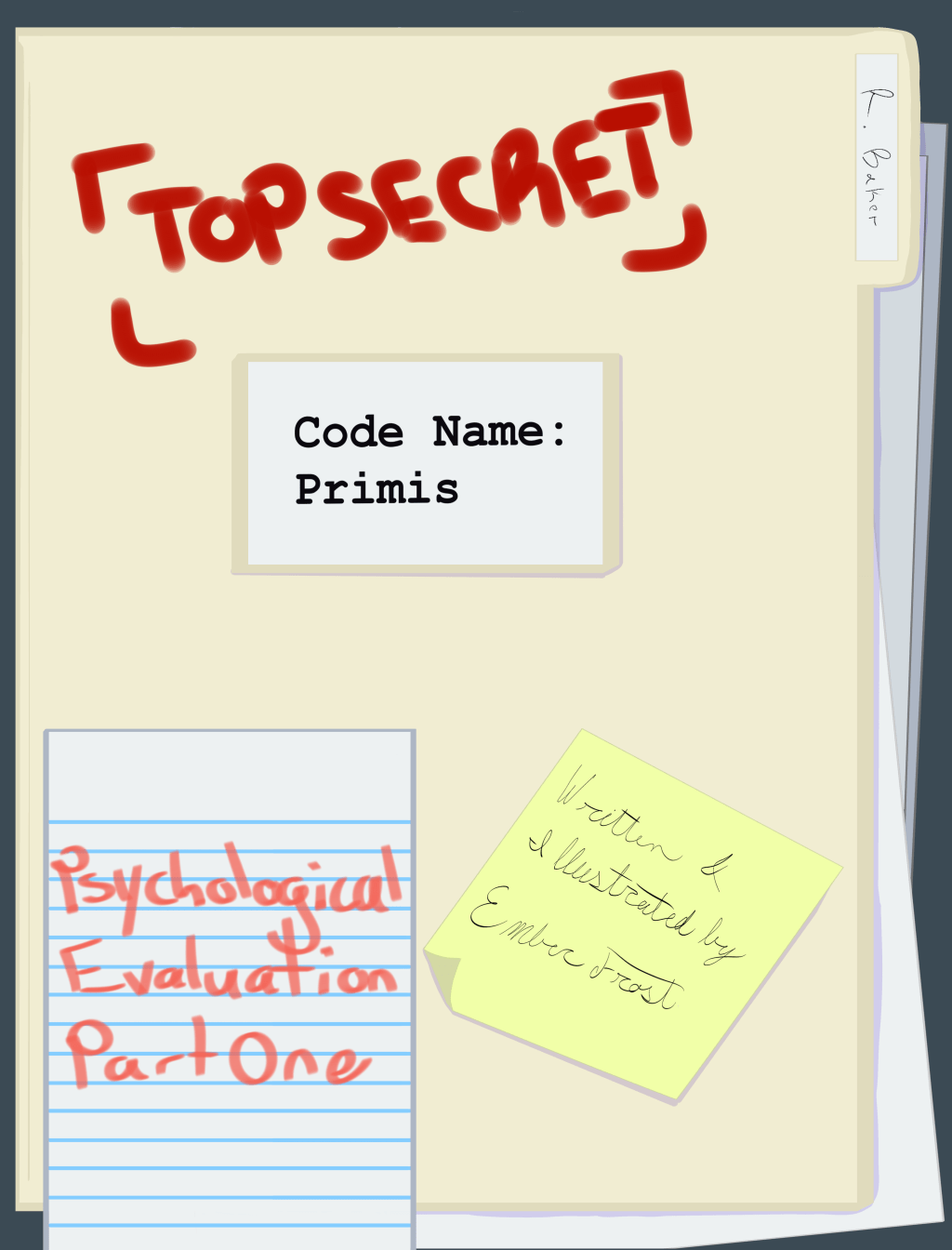
PSYCHOLOGICAL EVALUATION
CONDUCTED BY: E. ACKERMANN
01/28/2024
“Alright, we are recording. It is 13:27 on Thursday, January 28th, 2024. I’m Dr. Ackermann. The detectives told me a little about you. You go by Rowan, correct?”
“Yes, Rowan Baker.”
“So Rowan, you’ve not spoken to anyone in, what, a year? What changed?”
“One year, two months, and thirteen days. This story has waited long enough. If I am to be tried for my actions, I want to be judged by the truth, not what investigators and so-called professionals believe to be true.”
“Well, I am here to find out what really happened. I want to know what happened to you. Who is Rowan Baker, and how did she end up here? I’ll be using our conversations in the evaluation process to tell the courts whether or not you are culpable for the crimes they’ve accused you of.”
“You think I am crazy.”
“No, not at all. I don’t think anything yet.”
“You know what they have told you, though. You have me in here for murder. Objectivity is a myth. Like when a judge instructs the jury to disregard certain information. It never works. They do not disregard a thing.”
“That’s a fair enough point, but just try and give this a chance. I’ve been doing this a long time, and I know how to separate personal biases from my judgment.”
“Oh, I intend to tell you everything, but know that you may not get the answers you want.”
“We’ll see. So tell me what happened when you first arrived here.”
“It was the ninth and final bus of my four-day’s travel. The brakes screeched to a halt at the Portland Transportation Center around quarter-to-ten at night. My stop. A herd of people shimmied onto the platform. I was not ready to leave this trip behind. A haunting quiet exemplified the silence on the bus. The bus driver, a large white guy who looked too old to still have a license – let alone a job driving a multi-ton vehicle – ordered me to exit with my belongings. My too-small backpack hung off my shoulder as I joined the crowd outside the bus.
“I wandered through the station with my head on a swivel. It was that sense of dread you feel when someone’s eyes are on you even when you cannot see them. The echo of footsteps, dissonant voices overlapping one another, and the distant yet audible hum of the buses filled my ears. I wished I had brought earbuds to block out everything. Not wearing them was the correct choice, however. If someone wished me harm, I wanted to hear them coming. In the cacophony, I assimilated into the herd. Even those who saw me did not know I existed. My eyes caught a glimpse of an illuminated exit sign ahead. I pushed through the human traffic.
“The outside air bore its sharp fangs the moment I exited the station. Distant became the stale, regurgitated atmosphere within the confines of the bus that left me there. LED headlights on passing vehicles assaulted my retinas. My body tensed in a futile attempt to conserve heat. I shuffled in place, then my feet began picking up, and I was walking away from the station.
“Over an hour passed before I reached the main city streets. Buildings became less shy, pushing up against one another the further I walked. Shops were certainly closed at that hour, but the bars and pubs remained lively. The air tasted of sea salt and cigarettes, neither of which I wanted on my taste buds. A few people were walking on the sidewalks. They appeared homeless – lots of layers, bags carrying all their possessions, and an air of paranoia coming from them. I must have looked just like them my first night.
“I decided to observe them for some time. There were four women total. One appeared older than the rest, both in age and in time spent living rough. Her skin was tanned and leathery from years of sun overexposure, and she must have been wearing at least three layers of both shirts and pants. The youngest of the women looked to be my age. She looked up to the eldest woman, a sheep to her shepherd. The group whispered among themselves, what they were saying I could not tell. They waited at a corner and looked over their shoulders. Another woman, a tall black woman with taller hair and thrift store punk attire, approached them from the opposite direction. She spoke with the leader, handed each woman a parcel, then left. I could not distinguish what she handed them. They must have noticed my watching, as they shoved whatever the punk woman gave them into their bags or coats and scurried away.”
“You have strong situational awareness.”
“If I could watch them for as long as I did, someone else could just as easily have been stalking me.”
“A fair point. So tell me, what did you do after they left?”
“I searched for a safe place to sleep that night. Some people curled up in covered doorways to buildings. Others hid in alleyways. A couple more brazen than I lay against the sides of buildings in plain view to anyone passing by. My goal was to stay invisible. I would not risk sleeping in view of the streets, and doorways welcomed their own risks. Alleyways sounded like the ideal option.
“There was a break in the buildings: a small crevice next to a pizzeria. A wrought-iron fence blocked entry, but it was easy enough to scale. I threw my bag over the fence, then myself. In the dark, I blended in well with the black siding of the shop. Nobody would see me. I could rest for a bit, wake up before sunrise, and be out of there before anyone noticed.
“The backpack I took was my school bag. It was big enough for books, but not for an impromptu cross-country move. I managed to bring two changes of clothes and a notebook. I left my phone back in Washington. You people have resources to track phone signals.”
“’You people.’ Do you mean the police?”
“The police, the government, whoever else. They used it before; I knew they could do it again.”
“That’s true. The detectives tried to trace your phone when you first went missing. They couldn’t locate it.”
“I know. I made sure they would never find it.”
“You did a good job at that. Mind telling me where you disposed of it?”
“The phone did not come with me to Maine. The only items in my bag were the ones I stated. I removed one of my shirts from it and used it as a pillow that night. A few cars drove past, but their headlights only reached the alley entrance, not far enough to reveal my hiding spot. Despite this knowledge, I still found myself turning away and covering myself in my overcoat each time I heard an approaching engine.
“My eyes shut periodically; the tumult of the city would not allow me to rest long, even if I wanted to. Moving lights, honking horns of nearby vehicles, it all helped me stay awake. I must have drifted off at some point, though, maybe four or five in the morning. The sun was just beginning to rise, and I needed to get moving. I slung my pack over my shoulder and hopped the fence again.
“I had no set goal in mind – no clue where I was heading – I resigned myself to walking until I could no longer lift my feet. Cars and buses began streaming in from the highways. Pedestrians flocked along the sidewalks with the pigeons. I walked along with them. Many people I came near to hastily crossed the road to avoid me. I understand why they did this, but I cannot lie and say it did not hurt being treated as an invalid.
“I committed myself to learning as I walked. My laggard pace allowed me to take everything in. An amalgamation of old brick buildings and post-modern concrete monstrosities surrounded me. Multiple parking garages took up much of the real estate, but there were still a number of traditional houses along the way. A place called the Cumberland Avenue Youth Shelter across the street called one of the brick units its home. I considered going there. They could help me get on my feet, restart my life here. A young girl, younger than myself by the looks of her, came crashing out from inside the shelter. I could not see the tears on her face, but I could see the redness in her cheeks, the bloodshot eyes. She sniffed, looked back at the doorway, and left. I heard her sobs resume when she rounded the corner and left my sight. Not now, I decided.
“The smell of food nearby drew my focus away. Greasy, salty, deliciousness. A growl roared from my stomach, distracting me from the pain in my legs for a moment. I looked around to find the source of the scent. The gas station at the intersection included a convenience store: the Big Apple. By that point, I could no longer smell what had originally drawn me this way. Perhaps it was my brain’s way of telling me it needed food. It motivated me to keep going when I did not want to continue, and it only allowed me to stop once I reached food.
“I could not bring myself to go inside at first; when I stopped, the adrenaline dump hit me like a ton of bricks, and the muscles in my legs gave out from under me. I stumbled to the exterior wall to obscure my figure from the main road. Breathing stung, my stomach howled, and I could not believe this was my reality.”
“What did you do?”
“I wrote.”
 Ember Frost Writes
Leave a comment